What a commercial roof loss actually involves
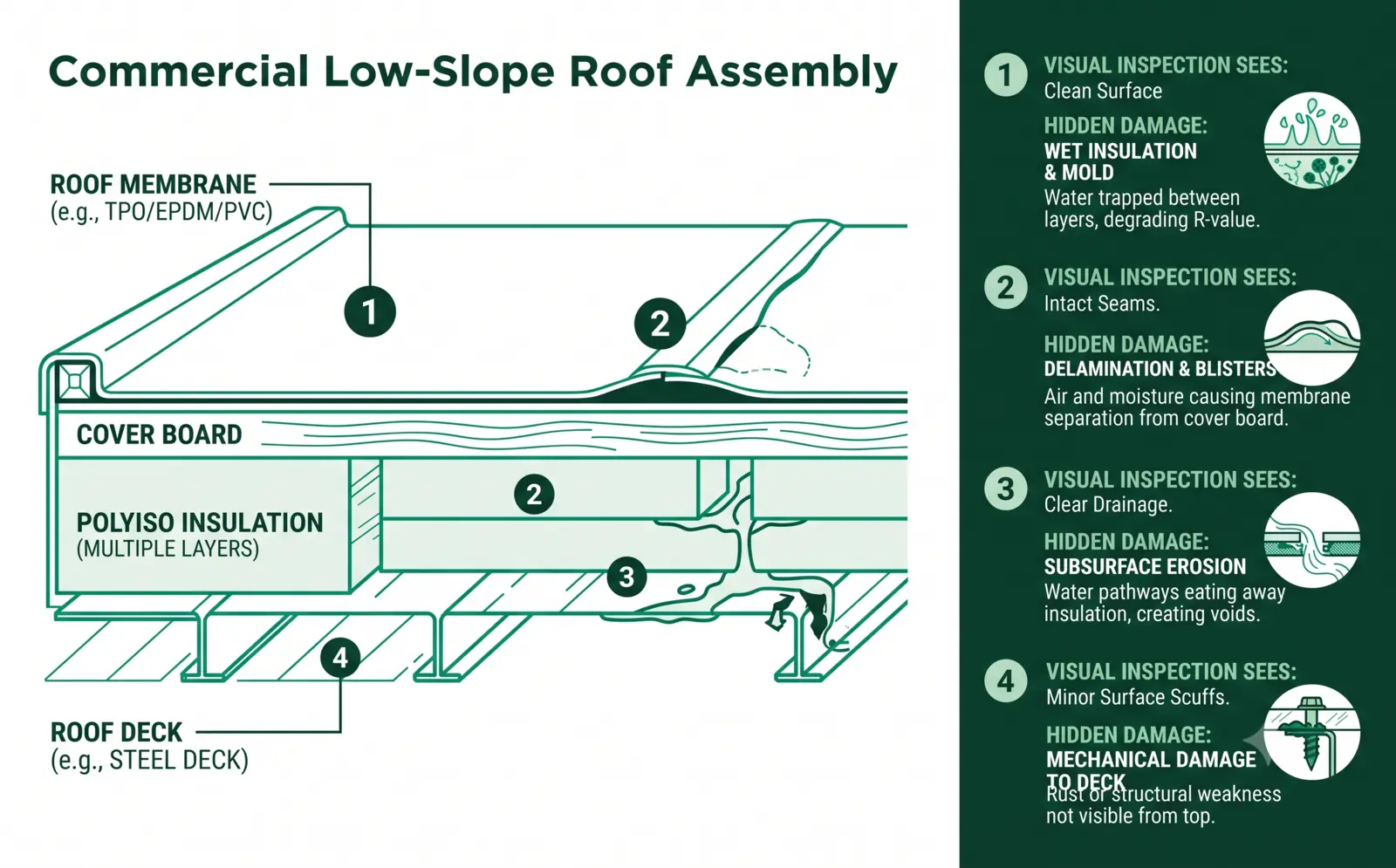
A commercial low-slope roof is not a surface: it’s a layered system, and the damage that matters is usually inside it. From the top down it’s the membrane, the insulation, and the deck, sitting on the building’s structure, with a drainage design meant to get water off before it pools. When that system is breached (by wind, by hail, by age, by a storm), water gets past the membrane and into the layers below, and that’s where a surface-only scope goes wrong. The membrane can read as intact or spot-repairable while the insulation beneath it is saturated across a wide area, no longer providing its R-value and holding moisture against the deck.
That wet insulation is frequently the single largest hidden cost in a commercial roof loss, and it’s invisible from the top. Finding it means documenting the assembly (moisture in the insulation layer, the extent of saturation, the condition of the deck underneath) rather than measuring the field of the membrane and calling it a reroof.
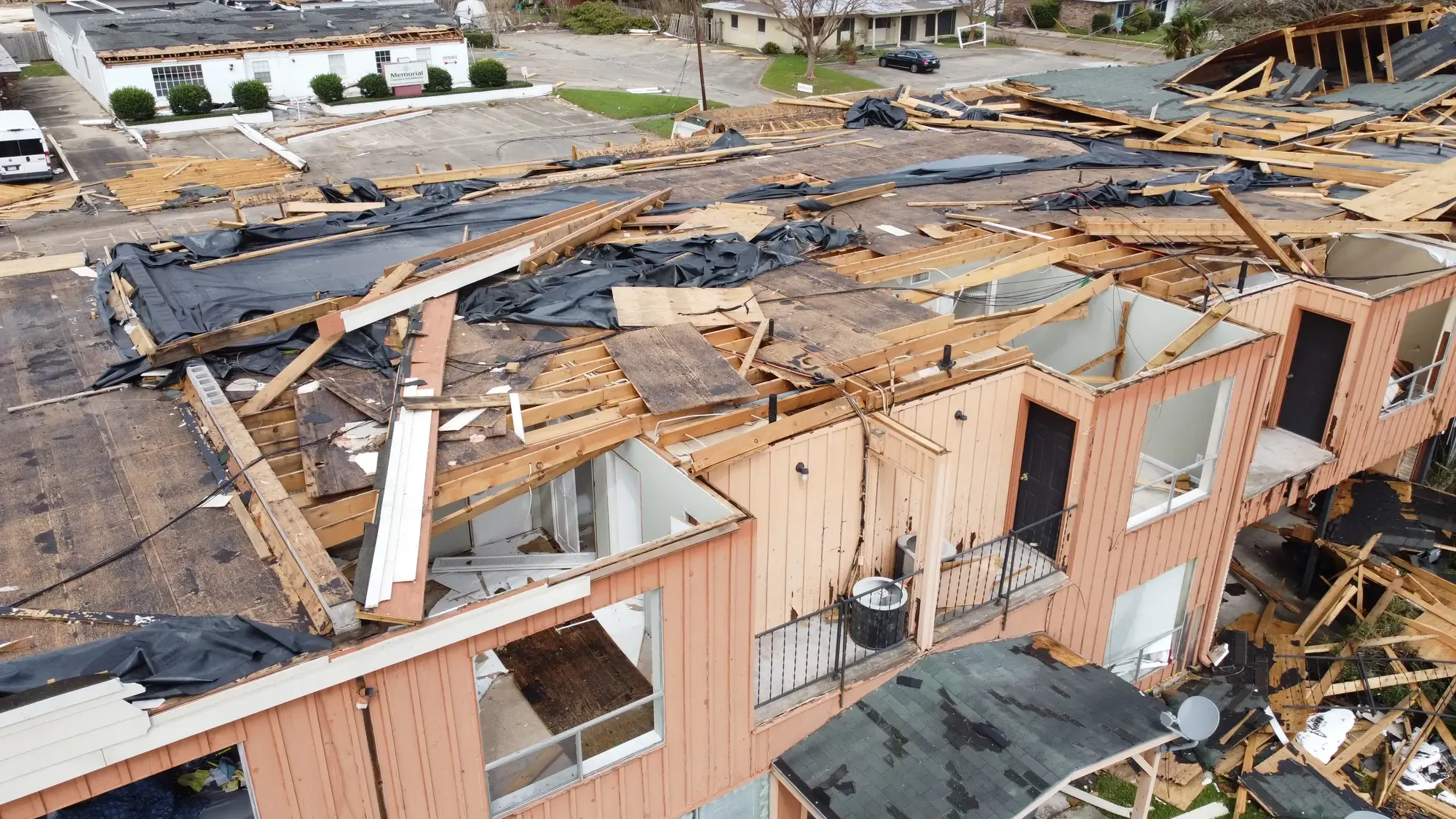
Below the insulation is the question that changes the whole job: is this a roof loss or a structural one? Water that has been in the assembly, or a storm that hit hard enough, reaches the deck and the structure: corroded steel deck, deteriorated fasteners, compromised framing. That’s the line between replacing a roof system and repairing a building, and it can only be drawn if the deck and structural condition are documented.
The rest of a commercial roof’s failures live at the edges and the water’s path: parapets, curbs, terminations, and the drainage. Low-slope roofs depend on drains and slope to shed water; damaged or undersized drains and ponding concentrate water and load and are often the condition behind the failure. All of it (the edges, the drainage, the ponding history) belongs in the record with the loss it produced.
Why the whole assembly is the file
A commercial roof estimate scoped from the membrane down misses the expensive part. Atlas documents the full assembly (membrane, insulation moisture, and deck), records the structural indicators that separate a reroof from a repair, and captures the drainage, parapet, and termination conditions where the roof actually fails. The result is a scope built on the system, not the surface, with a 3D record of conditions before the tear-off changes them.