
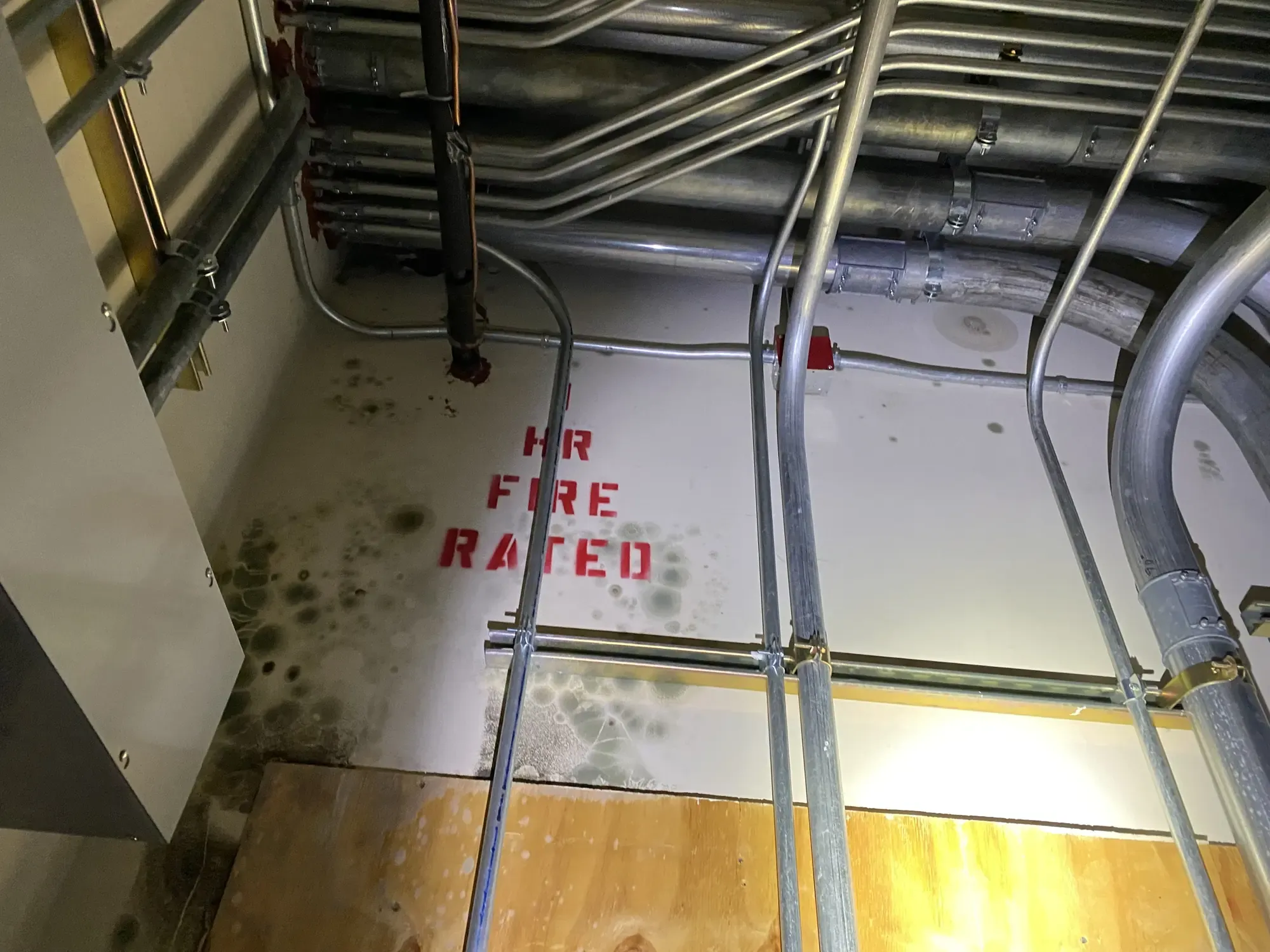
What mold actually tells you about a house
Mold is not really the loss: it’s the evidence of one. It grows where organic material stays wet, which means every mold problem is a moisture problem first: a leak that ran, a flood that didn’t fully dry, an ice-dam or frozen-pipe event from last winter, a humid basement that never gets below the dew point. Document the mold without documenting the water that fed it, and the file describes a symptom while leaving the cause (and the reason it could come back) off the record.
The second thing about mold is that the part you can see is usually the smallest part. A patch of growth on the face of the drywall almost always means more on the back of that same board and in the cavity behind it, where it’s dark, still, and often still damp. The affected area is defined by where the moisture went, not by where the growth is visible, so scoping to the visible patch consistently undersizes the loss. It takes moisture readings and thermal imaging (and sometimes opening the assembly) to show the difference between a surface issue and a systemic one.
New England’s climate keeps this in season year-round. Humid summers load basements and closed-up rooms with moisture; the winter freeze-and-thaw cycle leaves behind wet cavities from ice dams and burst pipes; older, tighter-then-leaky housing stock traps humidity in the wrong places. The result is that a lot of New England mold traces back to a water event weeks or months earlier, which is exactly why the moisture history belongs in the documentation.
Removal is the other place scopes go thin. Taking out affected materials without containment pushes spores into the rest of the house, so containment, negative air, and controlled removal aren’t extras: they’re the difference between a contained loss and a spread one, and they carry real cost that belongs in the estimate.
To be clear about the lane: Atlas documents the physical loss: the moisture, the extent, and the scope the removal requires. It doesn’t offer health guidance or a remediation protocol; the licensed professionals on the job own that. What Atlas produces is the record and the estimate the claim is built on.
Why the extent is the whole question
A mold estimate lives or dies on extent. Atlas documents the moisture source and whether it’s still active, maps the growth behind the finishes with readings and imaging instead of guessing from the visible patch, inventories the affected materials, and reflects containment and controlled removal as real line items. The result is a scope sized to the actual condition, with a 3D record of the space before removal changes it.