
Built for the People Who Carry the Claim.
Atlas produces the documentation and the estimate. The restoration contractor, the public adjuster, the independent adjusting firm, and the general contractor carry the claim, the rebuild, and the relationship. Here is how the file fits each of them.
Atlas writes the same measured file for whoever holds the claim. The scope is the building's, not the client's.
The Rebuild Is Only as Good as the Estimate. The Estimate Is the Job Nobody Has Time For.
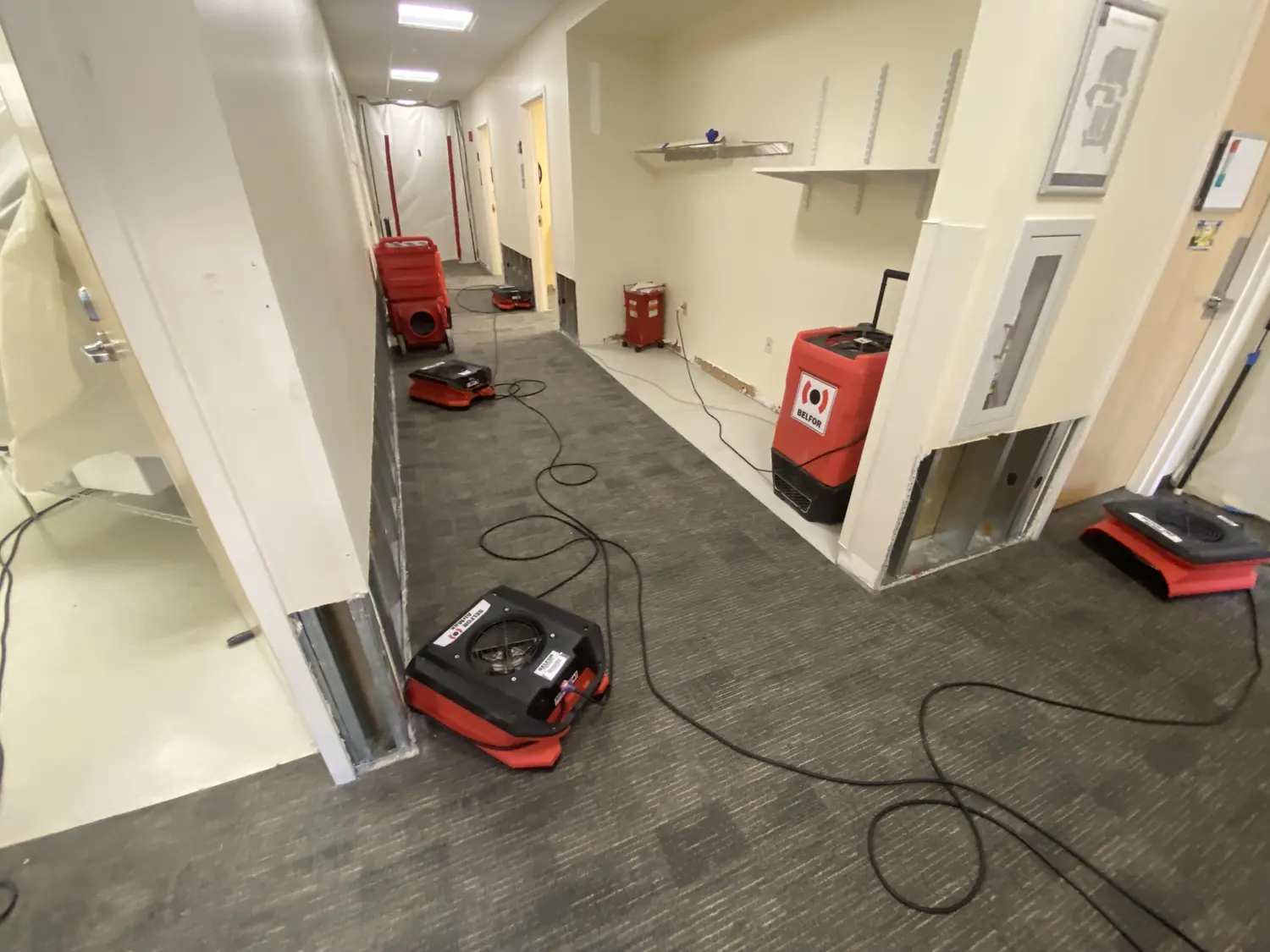
Your PMs are good at what they do: drying houses, running crews, keeping the insured calm. The reconstruction estimate is a different seat, and in most shops nobody sits in it full time. So the rebuild gets scoped at the end of the day, to the visible damage, from memory and a few photos. It comes back with questions, and every item that got left off is money you already spent.
Atlas sits in that seat, one file at a time. Bring Atlas in when mitigation is done. Atlas walks the loss, checks that the demolition matches the damage, measures it, and writes the reconstruction in Xactimate® so it reads top down and trade by trade: continuous flooring to the natural break, detach and reset as its own labor, paint to the corner, two coats, general conditions named, code items on their own lines. Back to you as ESX and PDF. You review it, you submit it, your PM never opened Xactimate.
Already scoping your own jobs? Send the DocuSketch or Matterport link and your notes. Atlas writes the estimate from your file and tells you what it couldn't verify.
The Estimate Is Where the Settlement and Your Fee Both Live.
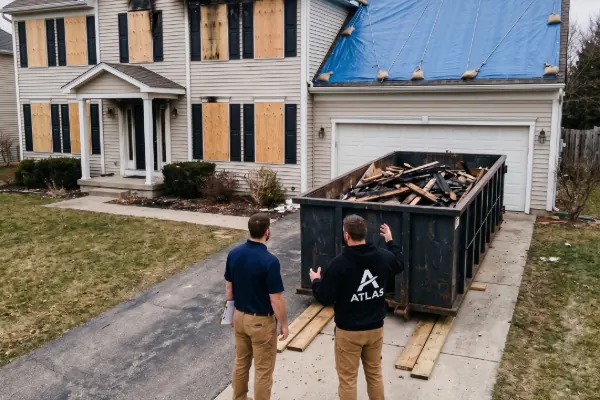
For a public adjuster, the estimate is the case. It's what the loss is measured against and what your fee is calculated from, so a thin one costs you twice. Atlas builds it the way you'd build it if you had the day: on site, measured, photographed, every quantity from the sketch, every line able to show its work from proof of loss through appraisal, or in Massachusetts, through reference.
Most firms Atlas works with cover territory they don't live in. Atlas is local across New Hampshire and Massachusetts: on site, measuring and photographing the loss, and back to you with the file while the claim clock is still your friend. Atlas tees it up. You take the swing.
Atlas also writes for independent adjusting firms. The same building, measured the same way, produces the same scope. That is the point of a measured file: it does not change depending on who is holding it.
Your Adjusters Stay on the Claim. Atlas Carries the File.
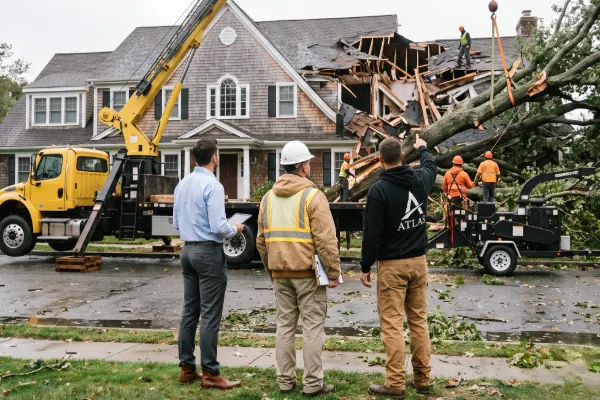
Volume arrives all at once. A freeze week in January, a nor'easter, a CAT assignment, and the same field staff is expected to inspect, photograph, write, and have the file reconcile on the first pass. When the person on site isn't the person writing the estimate, the scope gets simplified and the desk can't see the room.
Atlas is overflow estimating written to your standard. Send the assignment and your guidelines. Atlas inspects, measures with Matterport and laser, photographs every affected surface, and writes the Xactimate® estimate with your price list, your labor settings, your O&P rules, and your carrier's conventions. Your adjusters stay on the claim and the client relationship. Atlas carries the scope, the estimate, and the documentation. File capacity without adding headcount, and one estimating standard across every adjuster in the office.
Already have the ESX, the photos, and the scope notes? Send them. Atlas writes from your file, in your format, and returns it as ESX and PDF.
Atlas also writes for public adjusters and contractors. The file is the building's. Nothing in it argues.
Your Scope, in the Format the Insurance World Expects.
You run the build. Atlas turns what you're doing into the documentation the carrier and the lender need, so nothing you perform goes unrecorded or unbilled. Walk the job with Atlas on site or on a video call and send us what you have for documentation. We’ll take it from there.
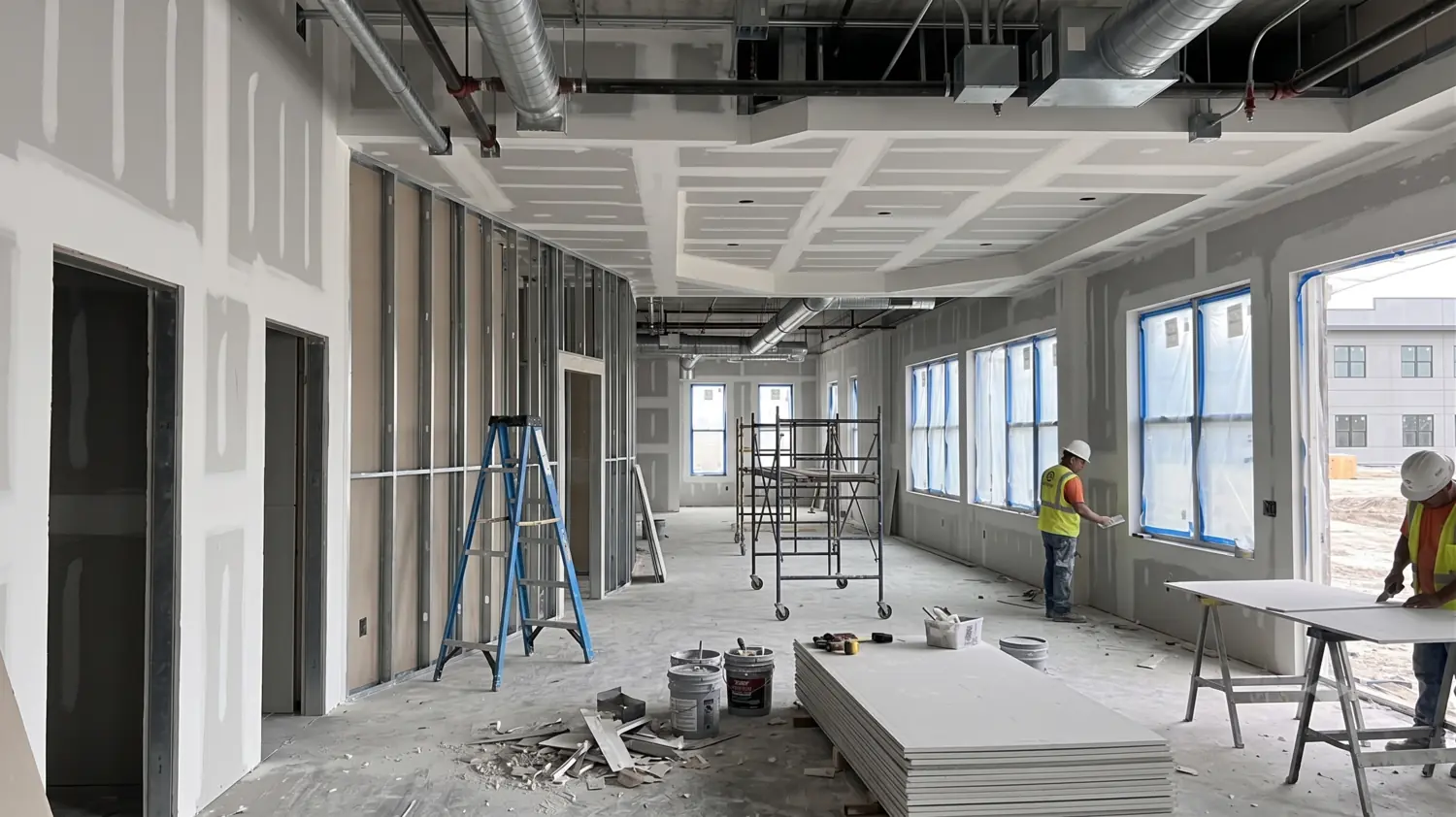
One construction line can represent ten or twenty insurance estimate items. Atlas makes sure the labor, materials, equipment, protection, and supporting work buried inside your bid are documented instead of disappearing inside a lump-sum number.